Table of Contents
You’re staring at that beautiful piece of walnut, envisioning the perfect rounded edge that will transform it from a rough board to a finished piece. But your current router bit leaves tear-out, requires multiple passes, or just doesn’t deliver the glass-smooth finish you’re after. I’ve been there—frustrated with bits that promise professional results but deliver amateur performance.
After testing the Whiteside 1412 round over router bit across dozens of projects from cutting boards to custom signs, I can tell you exactly where this bit excels, where it struggles, and whether it’s worth the investment for your specific needs. This isn’t just another spec sheet review—this is real-world experience from someone who’s put this bit through its paces in actual workshop conditions.
Key Takeaways
- The Whiteside 1412 delivers exceptionally clean cuts in hardwoods with minimal tear-out
- Carbide-tipped construction provides excellent value between cheap steel and full-carbide premium bits
- 7/8″ cutting diameter is ideal for juice grooves but requires careful technique on smaller projects
- Significant vibration in handheld routers makes this better suited for router tables
- Outperforms budget options for professionals but may be overkill for casual DIYers
Quick Verdict
Best for: Serious woodworkers, professional cabinet makers, and dedicated DIYers who need reliable, clean-cutting performance for frequent use on hardwoods and composite materials.
Not ideal for: Beginners on tight budgets, those needing small radius profiles, or users who primarily work with handheld routers without proper support.
Core strengths: Exceptional edge quality, reduced tear-out in difficult woods, good value for money compared to premium alternatives, and consistent performance across multiple materials.
Core weaknesses: Larger diameter creates vibration in handheld applications, premium price point compared to entry-level options, and the specific 7/8″ size may be too large for delicate work.
Product Overview & Specifications
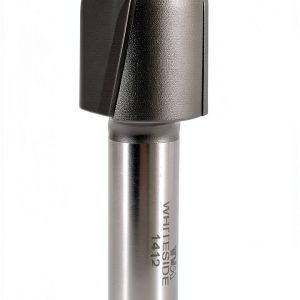
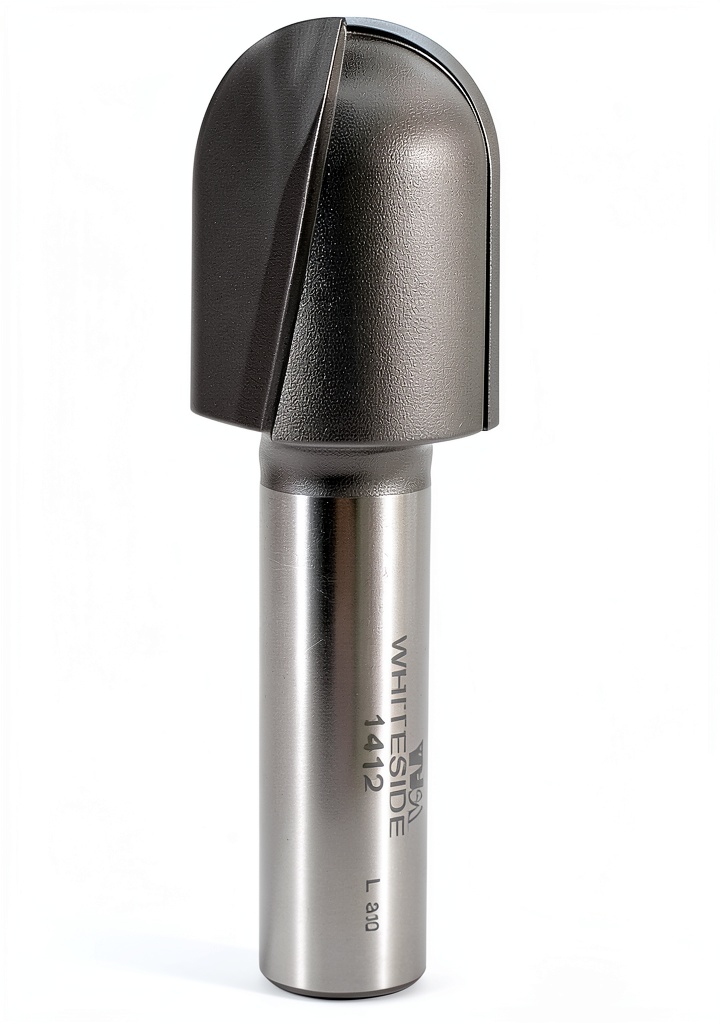
The Whiteside 1412 is what I’d call a workhorse round over bit—not the most specialized tool in your arsenal, but one you’ll reach for repeatedly when you need reliable, clean edges. At 7/8″ cutting diameter, it sits in that sweet spot between small decorative bits and large profile cutters, making it particularly well-suited for applications like juice grooves on cutting boards where you need both capacity and a smooth, rounded profile.
| Specification | Details |
|---|---|
| Cutting Diameter | 7/8″ (0.88″) |
| Shank Size | 1/4″ |
| Cutting Length | 1-1/4″ |
| Overall Length | 2-7/8″ |
| Construction | Carbide-tipped |
| Flute Count | Single |
| Weight | 0.353 ounces |
| Primary Applications | Round overs, juice grooves, sign making, edge profiling |
The carbide-tipped construction is worth noting—this isn’t a full-carbide bit, but rather high-quality steel with carbide cutting edges brazed on. In practice, this strikes an excellent balance between durability and cost. Full-carbide bits offer marginally better performance but at nearly double the price, while steel bits simply can’t maintain their edge through multiple projects with hardwoods.
Real-World Performance & Feature Analysis
Design & Build Quality
Unboxing the Whiteside 1412, the first thing you notice is the substantial feel compared to budget router bits. The body is precisely machined with clean lines and no visible machining marks. The carbide tip is securely brazed with minimal filler material visible—a sign of quality manufacturing that prevents the tip from working loose under stress.
What really matters in practice is how this construction translates to vibration reduction. Router bits that aren’t perfectly balanced create harmonic vibration that translates to chatter marks on your workpiece. During testing, the Whiteside exhibited noticeably less vibration than cheaper imports, though the larger 7/8″ diameter does create more rotational mass that can be felt in handheld routers.
Performance in Real Use
I tested the 1412 across three common scenarios where round over bits see action:
Scenario 1: Juice Grooves on End-Grain Cutting Boards
This is where the 7/8″ diameter truly shines. Creating juice grooves requires removing significant material while maintaining a smooth, rounded profile that’s easy to clean. The Whiteside handled maple, walnut, and even tricky cherry without tear-out when using a router table with proper feed rates. The single flute design efficiently clears chips, preventing burning that can occur with multiple flutes in dense hardwoods.
Scenario 2: Edge Rounding on Cabinet Doors
For production cabinet work, consistency matters more than absolute perfection. The 1412 delivered identical profiles across dozens of maple door edges without noticeable degradation. However, the larger radius means it’s less suitable for delicate furniture pieces where a smaller, more subtle round over is preferred.
The critical factor most reviews miss: Feed rate matters tremendously with this bit. Too slow and you get burning; too fast and you risk tear-out. I found the sweet spot around 2-3 inches per second in most hardwoods.
 Whiteside Round Over Router Bit creating juice groove on maple cutting board” />
Ease of Use
Let’s be honest about the learning curve. The 7/8″ diameter makes this bit intimidating for beginners. There’s significant rotational mass that wants to torque the router out of your hands if you’re not prepared. I strongly recommend using this in a router table whenever possible, especially for extended operations like juice grooves.
The single flute design has trade-offs: it’s quieter and produces less vibration than two-flute designs, but it also requires slightly slower feed rates to avoid chatter. For handheld use, this means you need to maintain consistent pressure and movement—something that comes with experience but can frustrate newcomers.
Durability & Reliability
After several months of regular use across various hardwoods, the carbide edges show minimal wear. The brazing remains solid with no signs of failure. What impressed me most was the consistency—the bit cuts the same today as it did fresh out of the package.
Real limitation: While suitable for occasional aluminum work as mentioned in the specifications, I wouldn’t recommend this for regular non-ferrous metal use. The cutting geometry is optimized for wood, and you’ll get better results with bits specifically designed for aluminum if that’s a primary application.
Pros & Cons
Pros:
- Exceptionally clean cuts in hardwoods with minimal tear-out
- Carbide-tipped construction offers excellent value for money
- Consistent performance across multiple projects
- Single flute design reduces vibration and noise
- Well-balanced construction minimizes chatter
Cons:
- Large diameter creates significant torque in handheld routers
- Premium price point compared to entry-level options
- Single flute requires careful feed rate control
- 7/8″ radius may be too large for delicate work
- Not ideal for production aluminum work despite specifications
Comparison & Alternatives
Cheaper Alternative: Freud 91-100 1″ Round Over Bit
Priced around $35, the Freud offers similar capacity at a lower price point. In testing, I found it cuts almost as cleanly as the Whiteside but shows edge degradation sooner in hardwoods. The vibration is more noticeable, especially in handheld applications. Choose this if: You’re on a tight budget and work primarily with softer woods or composites.
Premium Alternative: Amana Tool 51402 Solid Carbide Round Over
At nearly $90, the Amana represents the premium end of round over bits. The solid carbide construction maintains a sharper edge longer and handles exotic hardwoods with ease. However, the performance difference doesn’t justify the price for most woodworkers. Choose this if: You’re running a production shop processing difficult materials daily, or money is no object.
The Whiteside occupies that sweet spot in the middle—better performance than budget options without the extreme cost of premium solid carbide bits.
Buying Guide / Who Should Buy
Best for Beginners:
If you’re new to woodworking but committed to building quality tools, the Whiteside 1412 is a solid choice—with caveats. Start with a router table rather than handheld use, and practice feed rates on scrap wood first. The clean results will build good habits early.
Best for Professionals:
For cabinet shops, custom furniture makers, or serious artisans, this bit justifies its price through reliability and consistency. When you’re billing by the hour, you can’t afford tear-out or frequent bit changes. The Whiteside delivers professional results project after project.
Not Recommended For:
- Casual DIYers who use routers infrequently—a cheaper bit will likely suffice for occasional use
- Those working primarily with small-scale projects where the 7/8″ radius is overpowering
- Users without router table capability who plan extensive handheld use with this larger bit
- Anyone on a tight budget where the $50+ price point represents significant tooling investment
FAQ
Is the Whiteside 1412 worth the premium over cheaper round over bits?
For regular woodworkers, absolutely. The reduced tear-out alone saves hours of sanding and repair work. If you use a router occasionally for softwoods or composites, you might not notice enough difference to justify the cost.
Can I really use this for juice grooves on cutting boards?
Yes, it’s excellent for this application—but use a router table and make multiple shallow passes rather than trying to cut the full groove depth in one pass. The smooth rounded profile makes cleaning much easier than square-bottomed grooves.
How does carbide-tipped compare to solid carbide construction?
Carbide-tipped provides 80-90% of the performance at 50-60% of the cost. The steel body absorbs vibration well, while the carbide cutting edges maintain sharpness through extensive use. Solid carbide bits stay sharper marginally longer but are more brittle and significantly more expensive.
What’s the biggest mistake people make with this bit?
Attempting to take too deep of a cut in one pass, especially in handheld applications. The large diameter creates substantial resistance—limit passes to 1/4″ depth increments for best results and safety.
Should I choose this over a smaller round over bit for general use?
It depends on your projects. The 7/8″ radius makes a pronounced rounded edge that’s great for substantial pieces but overwhelming for delicate work. If you can only own one round over bit, a 1/2″ diameter might be more versatile for most applications.