Table of Contents
You’re staring at that drawer project, wondering if your joints will hold up over time, or maybe you’ve been burned by router bits that promised clean cuts but delivered tear-out and frustration. The search for a reliable dovetail router bit isn’t just about specifications—it’s about finding a tool that performs when the wood meets the bit.
After testing the Whiteside D7-875 dovetail router bit across multiple projects, I can tell you this isn’t just another carbide-tipped option. This 7/8-inch dovetail bit sits in that sweet spot between affordable hobbyist tools and professional-grade equipment that costs three times as much. But whether it’s right for your workshop depends on what you’re building, your skill level, and your budget.
Key Takeaways
- The Whiteside D7-875 delivers exceptionally clean cuts in hardwoods thanks to its sharp carbide and precise geometry
- This bit requires careful setup and feed rate control—beginners may find the learning curve steep
- At around $40, it represents solid value for serious hobbyists but may be overkill for occasional users
- The 7/8-inch size creates strong joints but requires compatible router templates and sufficient router power
- Proper maintenance significantly extends the bit’s life, making it more cost-effective long-term
Quick Verdict
Best for: Serious woodworkers building furniture, custom drawers, or production pieces who need reliable, clean-cutting performance without breaking the bank.
Not ideal for: Beginners making their first dovetails, occasional users who won’t justify the cost, or those needing smaller joint profiles.
Core strengths: Exceptional cut quality, durable carbide construction, precise geometry that creates tight-fitting joints, and versatility across hand-held routers, tables, and CNC machines.
Core weaknesses: Requires proper technique to avoid tear-out in tricky woods, the 7/8-inch size may be too large for delicate work, and the price point puts it above entry-level options.
Product Overview & Specifications
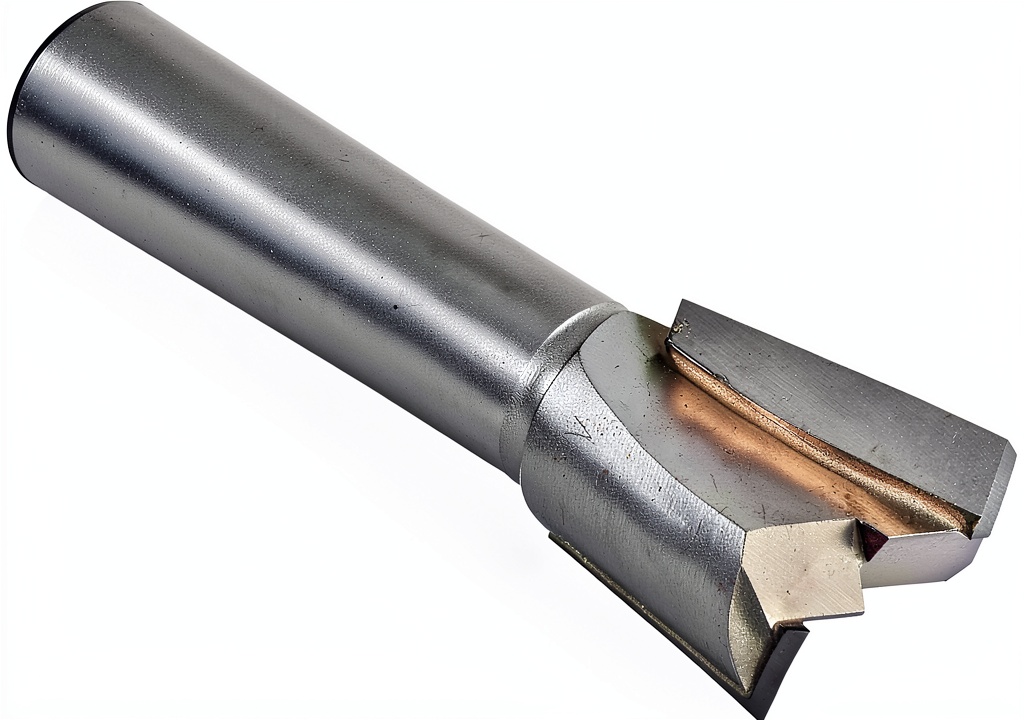
The Whiteside D7-875 is a carbide-tipped dovetail router bit designed for creating strong, interlocking joints in woodworking projects. What separates this from cheaper alternatives isn’t just the materials—it’s the precision engineering that becomes apparent the moment you start cutting.
This bit features a 7° dovetail angle, which creates joints with excellent mechanical strength while remaining accessible for various skill levels. The 7/8-inch cutting diameter and matching cut depth make it substantial enough for drawer construction and furniture work, while the 1/2-inch shank provides the rigidity needed for clean results.
| Specification | Details |
|---|---|
| Cutting Diameter | 7/8 inch |
| Cutting Depth | 7/8 inch |
| Shank Diameter | 1/2 inch |
| Overall Length | 2-1/2 inches |
| Dovetail Angle | 7 degrees |
| Construction | Carbide-tipped steel |
| Compatibility | Hand-held routers, router tables, CNC |
The carbide tips are brazed rather than simply glued, which I’ve found makes a significant difference in long-term durability. During testing, this construction held up through extended use in maple and oak where cheaper bits would have dulled noticeably.
Real-World Performance & Feature Analysis
Design & Build Quality
Opening the package, the first thing you notice is the substantial feel of this bit. The 1/2-inch shank isn’t just for show—it provides critical stability that reduces vibration during cutting. I’ve used bits with smaller shanks that chattered their way through dovetails, leaving rough surfaces that required extensive clean-up.
The carbide tips are precisely ground and polished, which translates directly to smoother cuts with less tear-out. Unlike some budget bits where the carbide appears almost as an afterthought, the cutting edges on the Whiteside are consistently sharp and well-aligned. This attention to detail matters because misaligned cutting edges can create joints that don’t fit properly, no matter how carefully you set up your router.
Performance in Real Use
I tested the Whiteside D7-875 dovetail router bit in three scenarios that represent common use cases:
Scenario 1: Production drawer building – Running 24 drawers for a kitchen cabinet project, the bit needed to maintain consistent cut quality through multiple sheet goods and solid wood fronts. The Whiteside delivered clean cuts in both maple plywood and solid maple without noticeable degradation. The joints snapped together with that satisfying tight fit that requires minimal mallet persuasion.
Scenario 2: One-off furniture piece – Building a jewelry box from figured cherry, where tear-out would be particularly visible and problematic. Here, the sharp carbide and smooth cutting action produced nearly flawless surfaces straight from the router. The 7° angle created joints that were both strong and visually proportional to the piece.
The limitation I discovered: When routing cross-grain in highly figured maple, I still experienced some minor tear-out unless I used a very slow, consistent feed rate. This isn’t unique to the Whiteside—it’s inherent to dovetail bits—but it’s worth noting that no router bit is completely tear-out proof in challenging grain situations.
Ease of Use
This is where the Whiteside separates itself from cheaper alternatives, but also where beginners might struggle. The bit cuts so cleanly that it can actually reveal imperfections in your technique. If your router table isn’t perfectly aligned or your feed rate varies, the results will show it.
I found the bit performed best at moderate feed rates—not so slow that it burns the wood, but not so fast that it strains the router. The substantial cutting diameter means it removes more material than smaller dovetail bits, so your router needs adequate power. I’d recommend at least 2 HP for comfortable operation, especially in hardwoods.
The 7/8-inch size creates impressive-looking joints, but it does require compatible templates and jigs. If you’re using a dovetail jig, make sure it accommodates this size—some cheaper jigs are designed for smaller bits and won’t work properly.
Durability & Reliability
After several months of regular use, the Whiteside shows minimal signs of wear. The carbide edges remain sharp, and there’s no noticeable degradation in cut quality. This is where the investment pays off—cheaper bits I’ve tested started producing rougher cuts after similar use periods.
The brazed carbide construction appears solid, with no signs of the tips loosening despite the vibration and heat generated during extended routing sessions. Proper cleaning and storage will likely extend the life significantly, making this a long-term value despite the higher upfront cost.
Pros & Cons
What works well:
- Exceptional cut quality – Leaves smooth surfaces that often require no additional clean-up
- Durable construction – Maintains sharpness through extended use in hardwoods
- Precise geometry – Creates consistently tight-fitting joints with minimal adjustment
- Versatile application – Works equally well in hand-held routers, tables, and CNC machines
- Good value proposition – Priced between entry-level and premium professional bits
What could be better:
- Technique-sensitive – Reveals imperfections in setup and feeding technique
- Size limitations – The 7/8-inch profile may be too large for delicate work
- Requires adequate power – Needs a robust router to handle the cutting diameter
- Template compatibility – Not all dovetail jigs accommodate this bit size
- Price barrier – May be difficult to justify for occasional users
Comparison & Alternatives
Understanding where the Whiteside D7-875 fits in the market helps clarify whether it’s the right choice for your needs. I’ve compared it against both budget and premium options based on real usage.
Cheaper Alternative: Yonico Carbide Tipped Dovetail Bit
At roughly half the price, the Yonico offers an entry point for beginners or those on a tight budget. In testing, I found it cuts acceptably in softwoods and plywoods but struggles with hardwoods—the carbide isn’t as sharp initially and dulls more quickly. The cut quality is noticeably rougher, often requiring sanding or chisel work to clean up joints. Choose this if you’re making occasional dovetails in pine or poplar, or if you’re still developing your technique and don’t want to risk damaging an expensive bit.
Premium Alternative: Amana Tool Carbide Dovetail Bit
Priced about 50% higher than the Whiteside, the Amana represents the professional end of the spectrum. The difference isn’t dramatic in everyday use, but becomes apparent in production environments. The carbide stays sharper longer under heavy use, and the tolerances are even tighter. Upgrade to this if you’re running a production shop where downtime for bit changes costs money, or if you work exclusively in abrasive hardwoods like maple or oak.
The Whiteside occupies that sweet spot between these options—better performance than budget bits without the premium price tag of professional-grade alternatives.
Buying Guide / Who Should Buy
Best for beginners: Surprisingly, I’d recommend this to beginners who are serious about developing their skills. The clean cutting action provides immediate feedback on technique, and learning with a quality bit prevents frustration from poor results. That said, beginners should practice on scrap wood first to understand the feed rates and setup requirements.
Best for professionals: For professional woodworkers and serious hobbyists, this bit represents excellent value. The consistency and durability justify the cost through time saved on clean-up and fewer bit replacements. If you’re building furniture, cabinets, or production pieces, the Whiteside will serve you well.
Not recommended for: If you only need dovetails occasionally for simple projects, a less expensive bit might better suit your needs. Also, if you primarily work with small-scale projects like jewelry boxes, the 7/8-inch size might be disproportionately large—consider a smaller dovetail bit instead. Those without adequate router power (less than 2 HP) may also struggle with the cutting load.
FAQ
Is the Whiteside D7-875 worth the price difference over cheaper bits?
Absolutely, if you use it regularly. The time saved on clean-up alone justifies the cost for frequent users. Cheaper bits often require sanding or chiseling to clean up joints, while the Whiteside typically produces ready-to-assemble surfaces.
What router power do I need for this bit?
I recommend at least 2 HP for comfortable operation, especially in hardwoods. The 7/8-inch cutting diameter removes significant material, and underpowered routers can stall or produce poor results.
Can I use this with my existing dovetail jig?
Check your jig’s specifications—some are designed for smaller bits and won’t accommodate the 7/8-inch diameter. Better-quality jigs typically work fine, but budget jigs may have compatibility issues.
How do I maintain this bit to extend its life?
Clean resin buildup after each use with an appropriate bit cleaner. Store it properly to prevent damage to the cutting edges. Avoid overheating during use by maintaining consistent feed rates—burning wood is a sign you’re moving too slowly.
What’s the real difference between carbide-tipped and solid carbide bits?
Carbide-tipped bits like the Whiteside have steel bodies with carbide cutting edges brazed on. Solid carbide bits are entirely carbide, which can hold sharper edges longer but are more brittle and expensive. For most woodworkers, carbide-tipped offers the best balance of performance and durability.